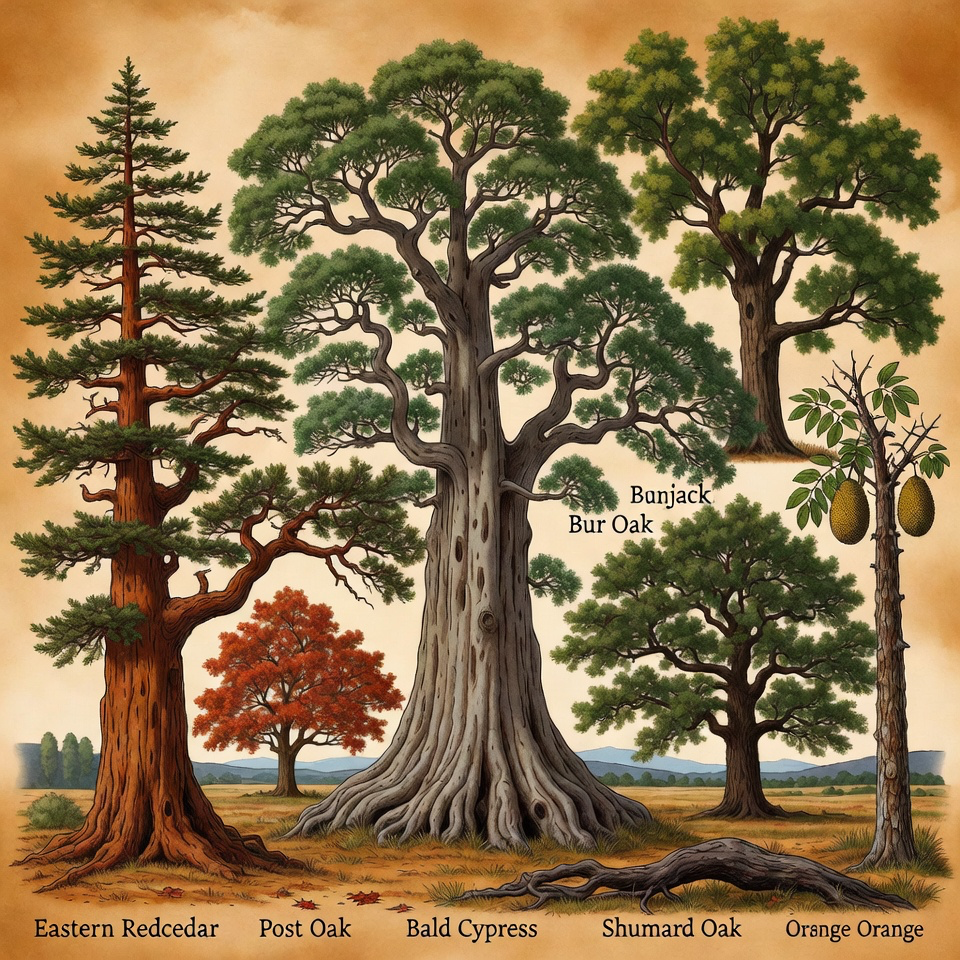
Oklahoma's climate—ranging from humid east to semi-arid west, with hot summers, cold winters, droughts, storms, and variable soils—limits ultra-long-lived species like bristlecone pines (which thrive in high-elevation deserts far west of the state). Instead, the longest-living trees here are tough natives adapted to fire, wind, poor soil, and extremes. These species often reach centuries in age, especially in protected areas like the Cross Timbers ecosystem or ancient forests.
The oldest documented living trees in Oklahoma are typically post oaks and eastern redcedars (actually junipers) in places like the Keystone Ancient Forest Preserve near Sand Springs, where specimens exceed 500 years. Historical reports mention ancient bald cypresses in southeast Oklahoma approaching or exceeding 1,000 years (though some estimates like 2,000-3,500 years for past giants were likely overstated). Oaks dominate longevity records due to slow growth, dense wood, and resilience.
Here are some of the longest-living tree species found or suitable in Oklahoma, with typical maximum ages in the state or similar conditions:
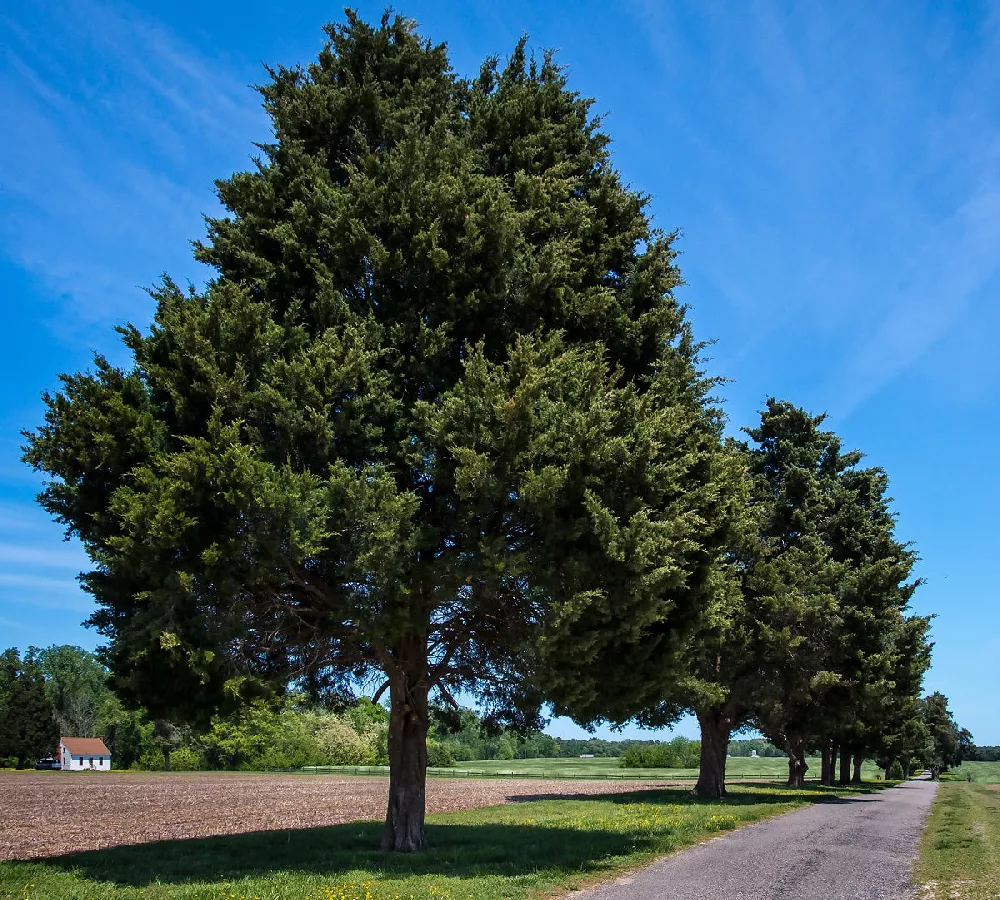
- Eastern Redcedar (Juniperus virginiana) Potential Age: 500+ years (some in Keystone Ancient Forest reach this). Why long-lived: Extremely drought-tolerant, fire-resistant bark, slow growth in rocky soils. Common in Cross Timbers and prairies; provides evergreen shelter and berries for wildlife.
- Post Oak (Quercus stellata) Potential Age: 300-500+ years (old-growth examples in Cross Timbers and Keystone). Why long-lived: Thrives in poor, rocky soils; thick bark resists fire; slow-growing and sturdy. Iconic in Oklahoma's Cross Timbers; gnarled, twisted forms tell stories of survival.
A gnarled, centuries-old post oak stands sentinel in the Cross Timbers, its bark etched by time and weather.
- Bald Cypress (Taxodium distichum) Potential Age: 500-1,000+ years (historical giants in southeast Oklahoma; some estimates higher). Why long-lived: Loves wet bottoms; rot-resistant "cypress knees" and heartwood; tolerates flooding. Found in swamps and rivers of eastern Oklahoma; massive bases and knees add prehistoric look.
Massive bald cypress trunks rise from swampy waters in southeast Oklahoma, with ancient knees protruding like ancient sentinels.
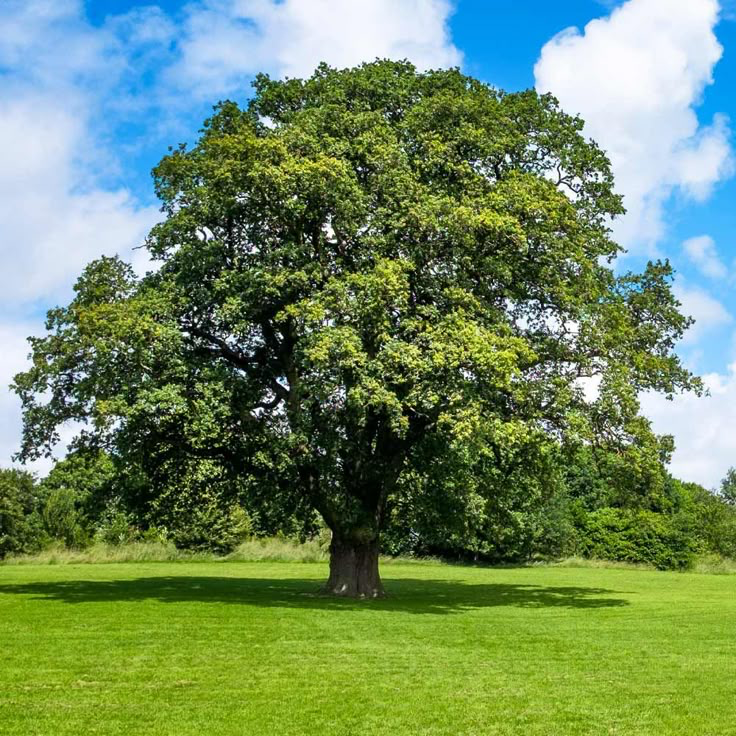
- Bur Oak (Quercus macrocarpa) Potential Age: 200-400+ years (examples in central Oklahoma around 150-200 years; potential higher). Why long-lived: Deep roots access water; thick bark; adaptable to prairies and edges. Provides huge acorns and broad shade; common in urban and rural settings.
A stately bur oak spreads wide branches, its rugged bark and massive trunk hinting at centuries of growth.
- Shumard Oak (Quercus shumardii) Potential Age: 200-400+ years. Why long-lived: Strong wood, heat/drought tolerance once established; good fall color. Reliable native for shade and longevity in central/southern Oklahoma.
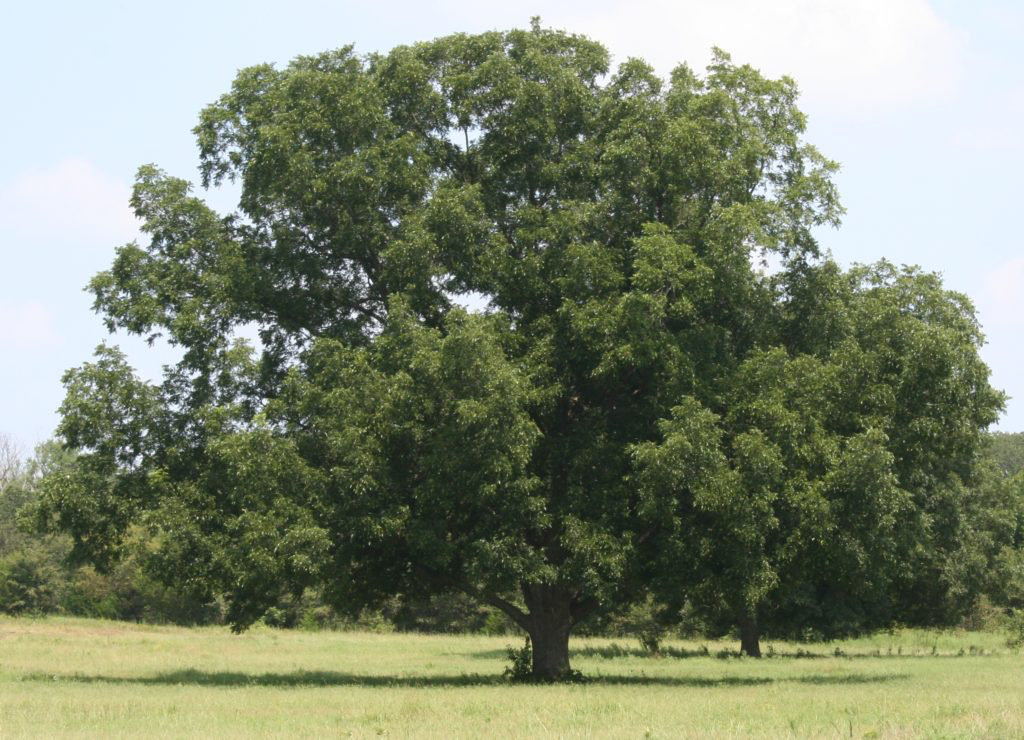
- Blackjack Oak (Quercus marilandica) Potential Age: 200-400 years (often co-occurs with post oak in old-growth stands). Why long-lived: Adapted to poor soils and fire; slow growth builds resilience. Part of Cross Timbers; twisted forms show tough survival.
Blackjack oaks cluster in rugged Oklahoma woodlands, their dark bark and compact form enduring for centuries.
- Live Oak (Quercus virginiana) — in southern Oklahoma Potential Age: 300-500+ years (examples like Tulsa's Council Oak over 340 years). Why long-lived: Evergreen foliage, massive spreading limbs; wind-resistant. More common near Texas border; iconic low branches for shade.
The historic Council Oak in Tulsa, over 340 years old, spreads wide evergreen branches as a living piece of history.
- Pecan (Carya illinoinensis) Potential Age: 200-300+ years. Why long-lived: Deep roots; productive nut tree; tolerates floods and heat. State tree of Texas but native to eastern Oklahoma rivers.
- American Elm (Ulmus americana) Potential Age: 200-300+ years (Survivor Tree in OKC ~100+ years but species capable of more). Why long-lived: Adaptable; vase shape; some resist Dutch elm disease. Urban survivors add grace despite challenges.
The resilient Survivor Tree, an American elm at the Oklahoma City Memorial, stands as a symbol of endurance.
- Osage Orange (Maclura pomifera) Potential Age: 200+ years (tough hedgerow tree). Why long-lived: Extremely hard wood; drought/fire tolerant; thorny defense. Planted historically for fences; now valued for longevity.
Dense Osage orange hedges form living barriers, their tough wood and form lasting generations.
Why These Trees Last So Long in Oklahoma
Oklahoma's longest-lived trees succeed through adaptation: slow growth in tough conditions builds dense, rot-resistant wood; thick bark shields against fire and insects; deep roots find water during droughts. Places like the Keystone Ancient Forest (protected old-growth Cross Timbers) preserve these ancients, offering hikes among 300-500-year-old post oaks and cedars.
Planting for longevity? Choose natives like post oak, Shumard oak, or eastern redcedar—mulch well, water during establishment, and protect from compaction. These trees don't just shade; they become family heirlooms, outliving generations and enriching Oklahoma's landscape for centuries.