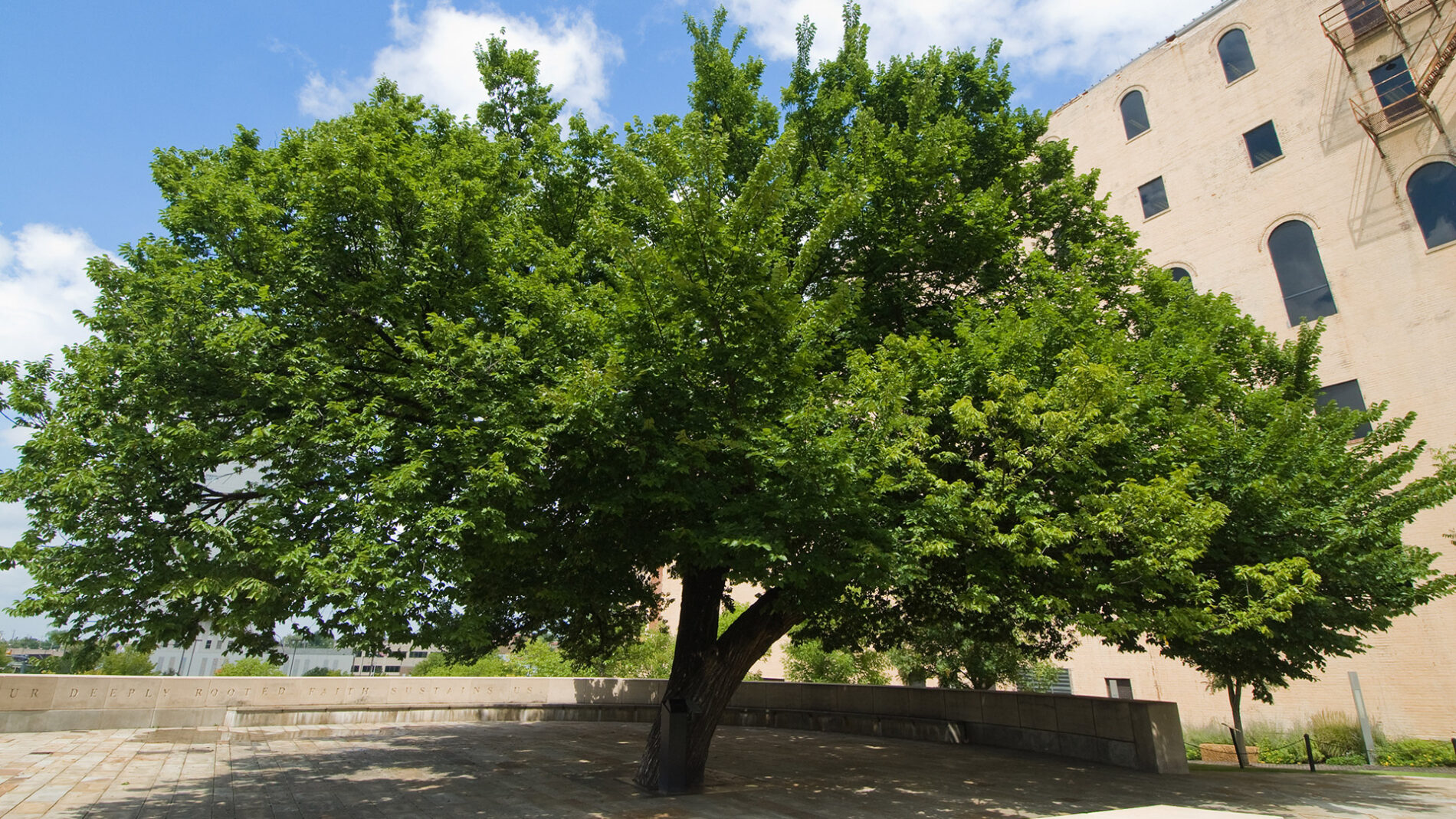
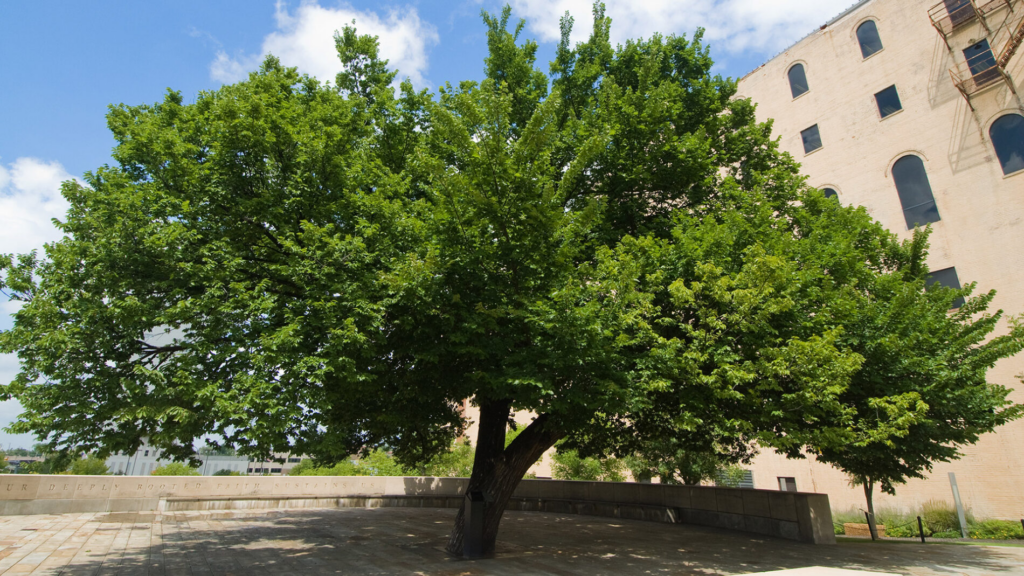
The Survivor Tree stands as the most famous individual tree in Oklahoma, a living symbol of resilience, hope, and recovery. This American elm (Ulmus americana), located on the grounds of the Oklahoma City National Memorial & Museum, has become an enduring emblem tied to one of the darkest moments in American history: the Oklahoma City bombing on April 19, 1995.
Planted around 1920, the tree was already providing shade in a downtown parking lot adjacent to the Alfred P. Murrah Federal Building for decades before the tragedy. When a truck bomb detonated, destroying much of the building and claiming 168 lives while injuring hundreds more, the elm was severely damaged. Its trunk was charred, branches were stripped away, and it was coated in debris and oil from the explosion. Many assumed it would not survive, but arborists and memorial planners decided to give it a chance.
Through intensive care—including pruning damaged limbs, treating for stability, and ongoing nurturing—the tree recovered and thrived. It was carefully preserved in place during the memorial's construction and now stands at the highest point of the memorial grounds, overlooking the Reflecting Pool and the Field of Empty Chairs. Its survival mirrored the recovery of the city and its people, turning a witness to tragedy into a powerful testament to endurance.
Today, the Survivor Tree is more than a century old and continues to grow, producing seeds that have been used to propagate saplings distributed across the country as symbols of hope and remembrance. It represents not just botanical toughness but the human spirit's ability to heal after profound loss.
While Oklahoma's official state tree is the Eastern Redbud (Cercis canadensis), celebrated for its vibrant pink-purple blooms that signal spring across the state, and other notable trees exist—like the historic Creek Council Oak in Tulsa, which marked the ceremonial founding site for the Lochapoka clan of the Muscogee (Creek) Nation in 1836—the Survivor Tree's story has captured national and international attention like no other.
Its legacy reminds visitors that even in the face of devastation, life can endure and inspire. If you ever visit Oklahoma City, a stop at the memorial to see this quiet, steadfast giant is a moving experience—one that connects history, nature, and human resilience in a single, living landmark.