Trees in residential areas often face harsher conditions than those in natural forests, leading to higher mortality rates. While trees in the wild die from old age, severe weather, or competition, backyard and neighborhood trees frequently succumb to human-related stresses that accumulate over time. Tree death is rarely sudden—it's usually a gradual decline from repeated or combined insults that weaken the tree's ability to photosynthesize, transport water and nutrients, or defend against pests and diseases.
Here are the most common reasons trees die in residential settings:
1. Soil Compaction
In yards, driveways, and play areas, foot traffic, mowers, vehicles, and even kids playing compact the soil around tree roots. This squeezes out air pockets, depriving roots of oxygen needed for respiration. Compacted soil also limits water infiltration and root growth, mimicking drought conditions even when it rains.

This photo shows severely compacted soil limiting root space around a tree base, a frequent sight in lawns and near sidewalks.
2. Construction and Mechanical Damage
Home additions, fencing, patios, or utility work often sever roots, wound trunks, or compact soil. Even small projects can remove 20-40% of the root system, which trees struggle to recover from. Damage may not show for years, but the tree slowly starves or becomes vulnerable to decay.
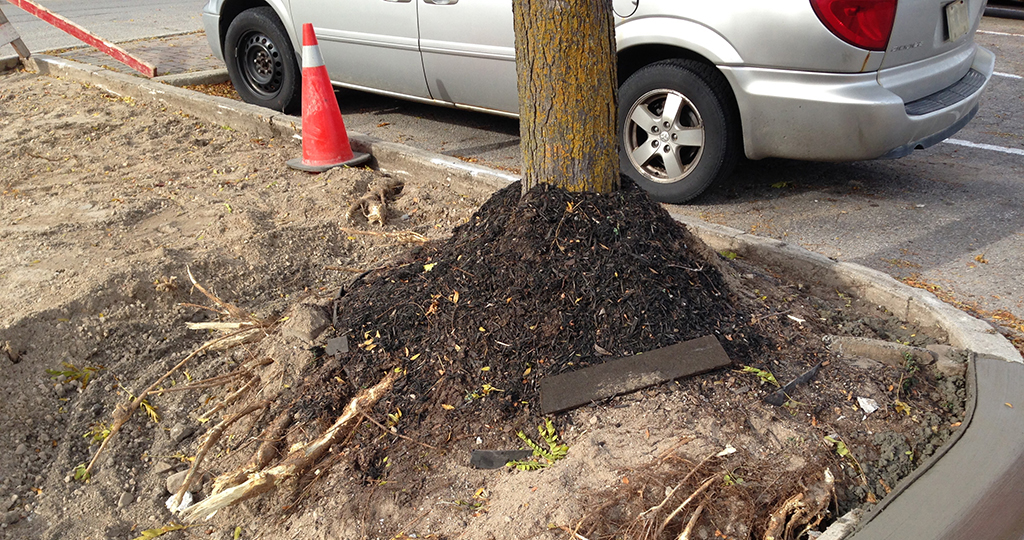
Exposed and severed roots from nearby digging or grading highlight how construction trauma kills urban trees.
3. Improper Planting and Maintenance Practices
Many trees are planted too deep (burying the root flare), in the wrong spot, or without removing girdling roots from nursery containers. Over time, this restricts nutrient flow. Girdling—where wires, strings, ties, or even turf edging encircles the trunk—chokes the tree by cutting off the cambium layer that transports water and sugars.
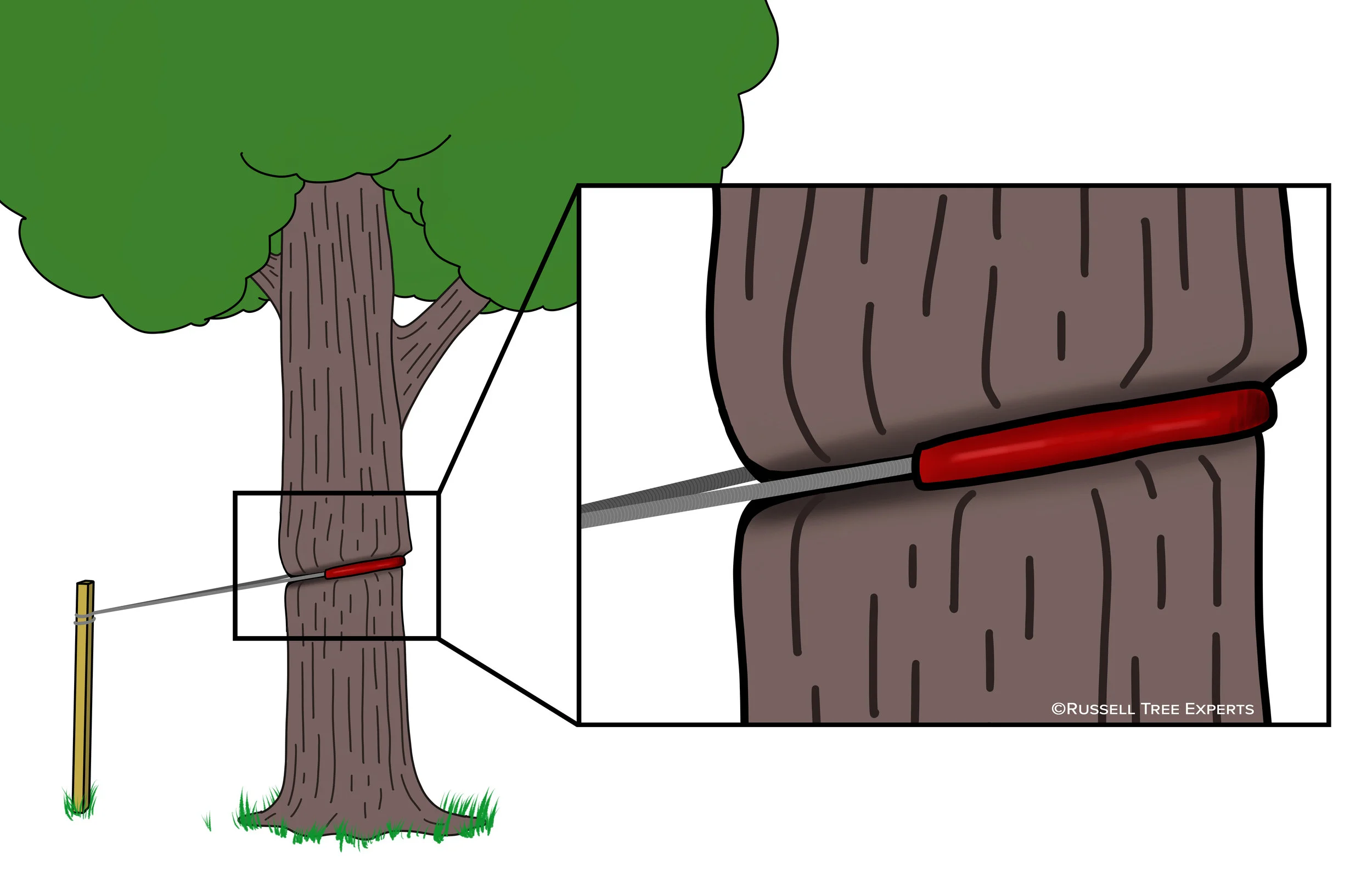
A support wire or stake tie left on too long creates a deep girdle, slowly strangling the tree as it grows.
4. Water Stress: Drought or Overwatering
Residential trees deal with inconsistent watering. Drought kills fine roots first, reducing water uptake and inviting secondary pests like borers. Overwatering (common with automatic sprinklers on lawns) saturates soil, suffocating roots and promoting root rot. Newly planted trees are especially prone, as people often water too much thinking wilting means thirst.
5. Other Urban Stressors
- Root competition from lawns and nearby pavement limits space and resources.
- Mechanical injuries from mowers ("lawnmoweritis") or string trimmers damage bark at the base.
- Pests and diseases attack weakened trees (e.g., bark beetles following drought).
- Poor species selection—planting trees unsuited to local soil, climate, or space.
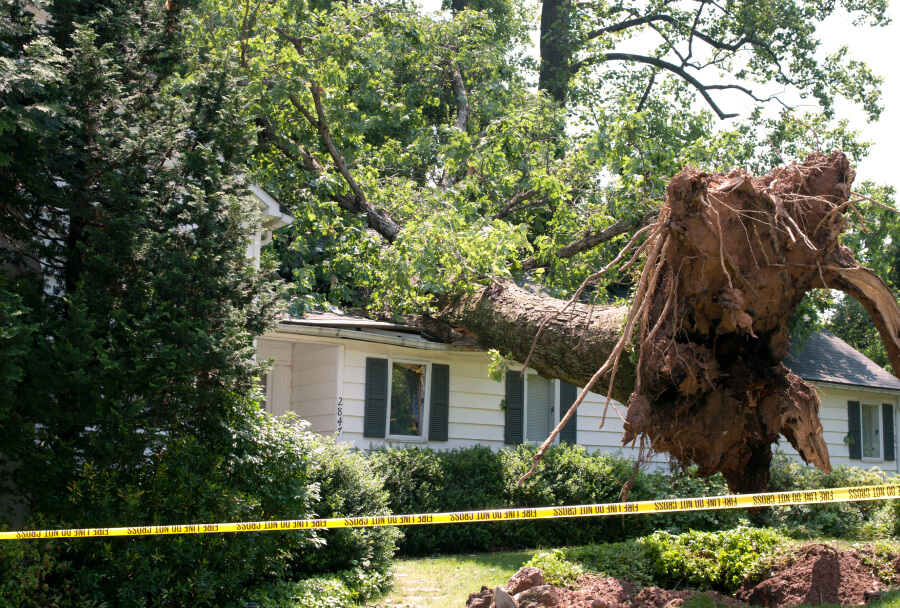
Dead or fallen trees in yards often result from these combined stresses, with exposed root plates revealing shallow, compromised systems.
Prevention Tips
To help trees thrive in residential areas:
- Plant at the correct depth with the root flare visible.
- Mulch properly (2-4 inches, kept away from the trunk) to retain moisture and reduce compaction.
- Water deeply but infrequently, especially during establishment.
- Avoid soil disturbance near roots during home projects; use barriers if needed.
- Remove old ties/wires promptly.
- Choose species suited to your area and site conditions.
- Monitor for early signs like thinning canopy, dieback, or mushrooms at the base, and consult an arborist.
With thoughtful care, residential trees can live long, healthy lives—providing shade, beauty, and value far beyond what nature alone allows in tougher urban-like settings.